Emphasis on local leadership and participation in community development

Kathmandu/ Emphasis has been placed on mobilizing the knowledge, experience, and capacity within the community rather than imposing plans and solutions from outside in the name of community development. Speakers say that real and sustainable social change is possible only through community leadership, collective learning, and citizen participation.
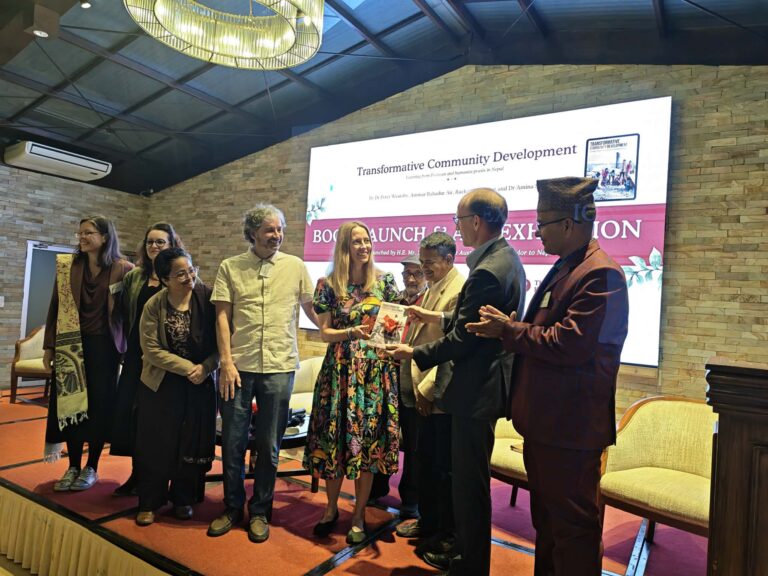
At the book launch event, ‘Transformative Community Development: Learning from Freirean and Humanist Practices in Nepal’, which encompasses over 28 years of community development practice in Nepal, speakers said that the development process should be based on the needs and experiences of the community.
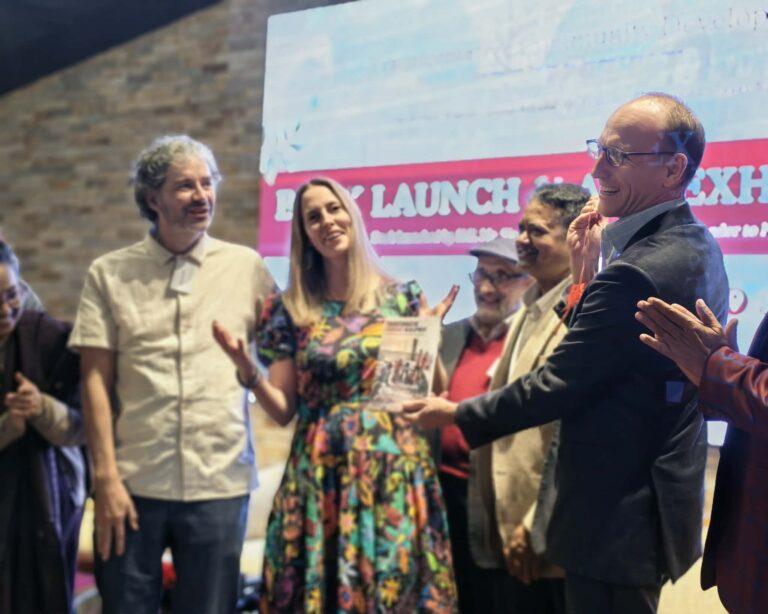
The book was released by Australian Ambassador to Nepal Simon Ernst at a function held in Kathmandu on Tuesday. The authors of the book are Dr. Peter Westoby, Amar Bahadur Eyre, Rachel Donovan and Dr. Meena Singh.
Ambassador Ernst said that the society has done remarkable work in the field of community-led development. Established in 1997 in western Nepal, the organization is directly working with about 200,000 people in Karnali, Lumbini and Sudurpaschim provinces and has more than 2,700 community groups affiliated with the organization, he said.
According to him, the peer society has been viewing the community as a force that can lead its own change, not as passive recipients of support. He said that the organization’s practice of listening to the experiences of the community, communicating with them, and uncovering the knowledge and capabilities within them through local community educators is important.
“Sustainable change cannot be imposed from the outside. It must be developed from within the community through patience, deep listening and partnership,” said Ansart. He said that the Asia Foundation, with support from the Australian government, is collaborating with the federal, provincial and local governments of Nepal through the Subnational Government Program.
At the event, the author of the book, Dr. Peter Westoby, said that in community development, recognizing individual problems as collective problems is an important basis for change. According to him, people initially consider problems such as unemployment, deprivation of education, and social exclusion to be personal. However, as people experiencing similar problems start to share experiences, they realize that those problems are social and systemic. Then they organize and start making collective efforts for change.
“People initially think of their problems as personal. But when they sit with others and listen to each other’s stories, they realize that those problems are collective,” he said. He said the aim of community development is to bring about positive change at the small group and local level and expand such efforts into social movements.