Disability is always sidelined in climate discussions

Belem, Brazil. Imagine for a moment, you have a physical disability, there is a flood near your house and you can’t escape, the rescuers sent by the government don’t know about your situation, and there is no infrastructure to use a wheelchair. What would you do in such a situation? Or, you are visually impaired, want to read about natural disasters and climate change, but there is no convenient medium for you. How do you feel?
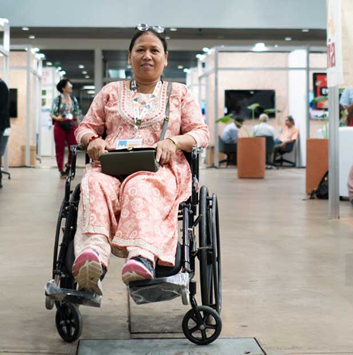
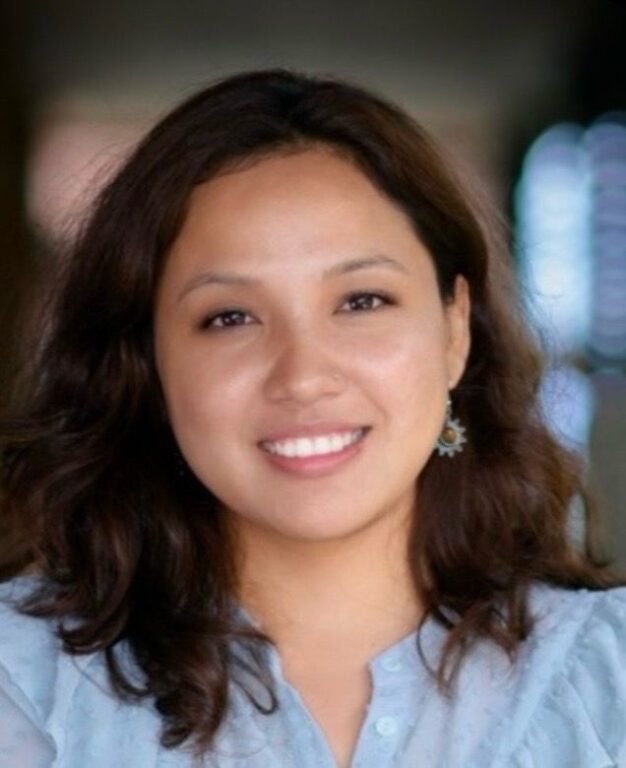
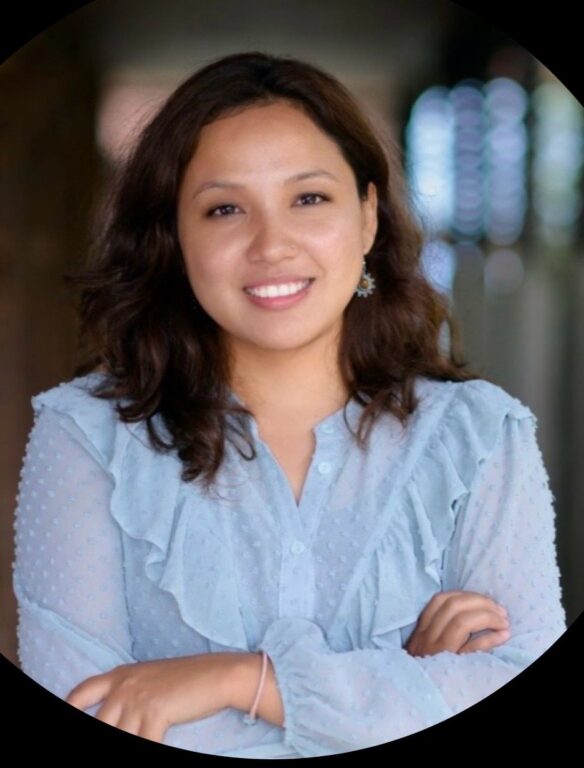
Shruti Kumal participating in COP 30 held in Brazil. Photo: Durga Rana Magar
These are hypothetical situations, but it is a life lived by someone who is experiencing something that is difficult to imagine for a moment. 2.2 percent of the total population of Nepal, or 647,744 people, are disabled. There are 12 different types of disabilities in the country: physical, multiple disabilities, autism, hemophilia, intellectual disability, mental or psychosocial, speech and voice, hearing-impaired, hearing-impaired, deafness, total blindness, and low vision. People with these different disabilities have different needs. According to the World Health Organization (WHO), one in every six people in the world has a disability.
The issue of people with disabilities, who are in such a large number, is always overlooked. People with disabilities struggle daily due to the lack of disability-friendly structures, infrastructure and systems in public places and various institutions. Moreover, they are the ones who are most affected and at risk in the event of climate-related disasters. People with disabilities around the world have been raising this issue at the United Nations Conference on Climate Change (COP) for a few years now. However, the issue of disability is still in the shadows.
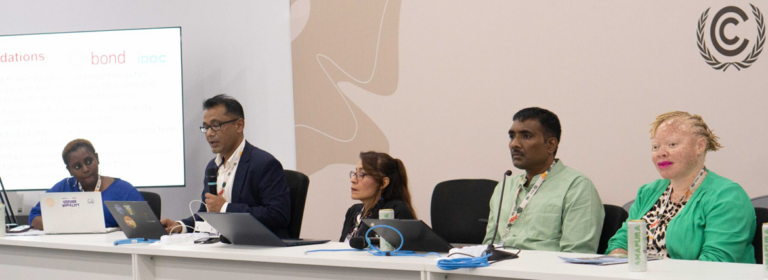
Discussion on disability at COP 30. Photo: Durga Rana Magar
Individuals and organizations working on disability rights are trying to strengthen their voices, saying that people with disabilities have been left out of climate planning and response processes. Women, youth, indigenous peoples, and least developed countries, including their own organizations or caucuses, are advancing their issues in an organized manner. On the issue of disability, although they have a voice in an organized caucus, the necessary representative group (constituency) of people with disabilities for the climate agreement has not been established. People with disabilities are jointly demanding its establishment. Without this, people with disabilities cannot participate effectively in the COP.
This time, it is expected that the work will move forward with the establishment of a constituency for people with disabilities at the ‘COP 30’ being held in the city of Belem, Brazil. Another demand they have at the COP is to ensure the presence of disabilities in financial support. People with disabilities, rights activists, and representatives of organizations are attending the COP 30 and advocating for the rights and inclusion of people with disabilities.
Nepalis raising disability issues at the COP
Deepika Lama (23) from Janakpur has also made a long journey to participate in COP 30. She has come to Belém to tell the world about the impact of the climate crisis on indigenous peoples of Nepal with disabilities. She is contributing to the ongoing debate on indigenous peoples and disabilities at the conference.
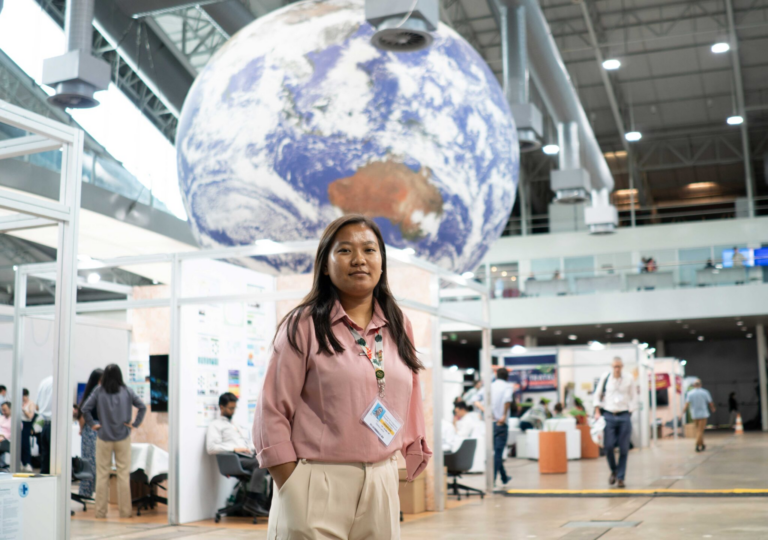
Deepika Lama participating in COP 30. Photo: Durga Rana Magar
Lama, who is participating in the COP for the first time, complained that the COP itself lacks infrastructure and structures that are suitable for people with disabilities. “Accessible infrastructure has not been built for us, people with disabilities have been facing problems at the COP since the past,” she says. “This time, there were no wheelchairs at the COP at the beginning, we had to shout for wheelchairs, there is a language problem with the volunteers, this happens every time at the COP, it shows how the issues of people with disabilities are being looked at.”
She says that people with disabilities have not been effectively represented in climate discussions. “We are not included in the discussions, there is not enough budget for disability, people with disabilities are always left out,” she says.
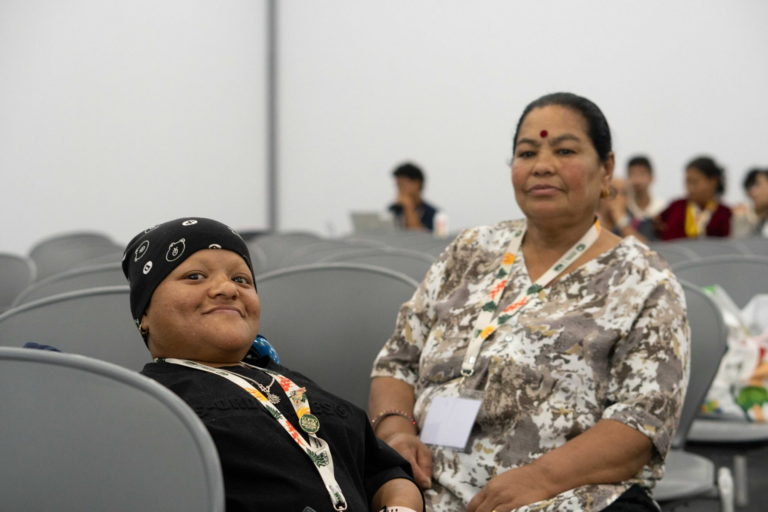
People with disabilities participating in COP 30. Photo: Durga Rana Magar
Kudjai Sharon Kandemiri, a disabled person who participated in the COP from Zimbabwe, says that while efforts on disability issues are increasing every year, it is still not enough. Other disabled people participating in the COP are complaining that the cases of people with disabilities are not being heard at the COP.
Shruti Maya Kumal, vice-president of the Federation of Indigenous Peoples of Nepal, who is also a participant in the COP, is also a person with a disability. She has an artificial leg and is using a wheelchair for the COP because she has difficulty walking for long periods of time. She says that being a woman, having a disability, and being from an indigenous community makes her more vulnerable to the impacts of the climate crisis. She says, “Indigenous communities associated with mountains, hills, and rivers, and especially indigenous people with disabilities, are directly affected by climate change.”
Mahbub Kabir of Global Disability Inclusion, which works in the field of disability, says that people with disabilities should be included in climate-related plans and financial plans. Similarly, the International Disability and Development Consortium, which also works in the field of inclusion, has also demanded effective participation of people with disabilities and direct access to climate finance.
Jenny Chinchillas, a disability rights activist from El Salvador, says people with disabilities are not being included in climate action. She says the climate crisis and the disability dimension of it must be addressed. She says the fact that 72 countries have yet to include disability in their Nationally Determined Contributions (NDCs) required for climate adaptation and carbon emissions reductions shows a general apathy towards disability issues.
‘Progress only in reports’
Pratima Gurung, a rights activist and founder of the National Indigenous Disabled Women’s Association, has been raising the issue of disability of indigenous women at the COP for the past 10 years. She says that marginalized communities, including indigenous women, are at high risk among people with disabilities. “Although climate change affects all of us, it especially affects women and indigenous people with disabilities, who are marginalized within this,” Gurung says. “Although indigenous communities that are directly affected by the climate crisis, including rivers, biodiversity, and water, have not been adequately debated at the COP.”
She says that those affected by climate change should not be viewed as a whole, but rather, they should be viewed differently according to each group and solutions should be developed. She comments that the government sends a report internationally every year, but nothing is done beyond that. She asks, “Is it our responsibility to write a good report?”
She says that there should also be a debate about effective participation and implementation initiatives for people with disabilities in climate change discussions.
– This Report was prepared with the support of the Journalism Fellowship Program organized by Internews’ Earth Journalism Network and the Stanley Center for Peace and Security under the Climate Change Media Partnership and published in Nepal News Online News Portal, https://nepalnews.com/2025/11/17/disability-is-always-sidelined-in-climate-discussions/