
Global Climate Action Agenda at COP 30


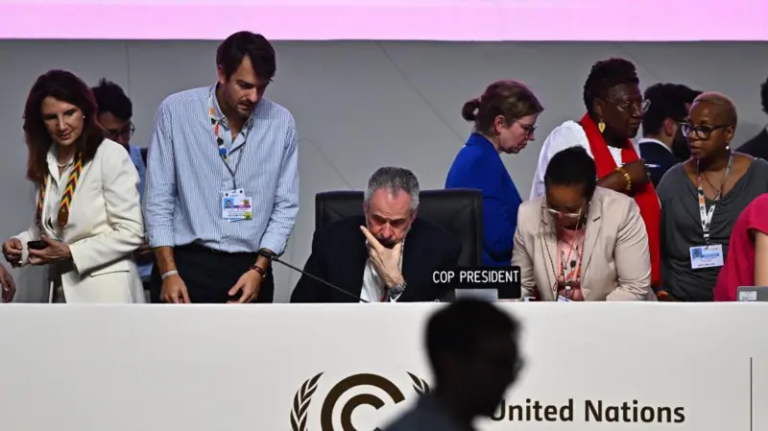
The conclusion of COP 30 in Belem, Brazil, in November 2025, marked not an end, but a powerful new beginning. Hailed as the “COP of Implementation,” the conference showcased a decisive global shift from setting climate pledges to delivering tangible solutions. This spirit unified the conference, demonstrating how governments, businesses, financial institutions, cities, and civil society are now working in concert to turn ambition into action across every critical system of the global economy.
Driving this acceleration was the COP 30 Global Climate Action Agenda (GCAA), a refined framework structured around six interconnected themes: (1) transitioning energy, industry, and transport; (2) stewarding forests, oceans, and biodiversity; (3) transforming agriculture and food systems; (4) building resilience for cities, infrastructure, and water; (5) fostering human and social development; and (6) unleashing the cross-cutting enablers of finance, technology, and capacity-building.
Theme 1: Transitioning Energy, Industry, and Transport
This theme focused on the rapid and equitable shift away from fossil fuels across power, industry, and transportation. A landmark achievement was the commitment from the Utilities for Net Zero Alliance (UNEZA) to invest nearly USD 1 trillion by 2030, significantly raising its annual target to USD 148 billion for renewables, grids, and storage. The “Belem 4x Pledge” set a goal to quadruple the global use of sustainable fuels by 2035. In heavy industry, the “Belem Declaration for Green Industrialization” was launched to position developing countries at the forefront of clean manufacturing, supported by plans to make near-zero emission steel and cement the preferred choice in global markets by 2030. Transport saw major advances with the launch of the “COP 30 Sustainable Aviation Fuel (SAF) Campaign,” the establishment of new green shipping corridors, and the electrification of major freight routes, such as Brazil’s e-Dutra electric truck corridor.
Theme 2: Stewarding Forests, Oceans, and Biodiversity
This theme placed nature at the heart of the climate agenda. The most prominent announcement was the launch of the Tropical Forest Forever Facility (TFFF), which secured USD 5.5 billion in initial commitments towards a long-term goal of USD 125 billion, with a groundbreaking provision that at least 20% of payments will go directly to Indigenous Peoples and local communities. The Intergovernmental Land Tenure Commitment (ILTC) set a target to secure the land rights of Indigenous Peoples over 160 million hectares. For the ocean, Brazil committed to sustainably managing 100% of its national waters by 2030, a massive step for global ocean governance. Significant momentum also built for coastal ecosystems through the Mangrove Breakthrough and the launch of a new Saltmarsh Breakthrough.
Theme 3: Transforming Agriculture and Food Systems
The focus here was on building climate-resilient food systems that enhance food security. A major coalition of over 40 organizations announced USD 9 billion in committed investments for regenerative agriculture, aiming to cover 210 million hectares and reach 12 million farmers by 2030. The TERRA initiative was launched to scale up agroecology and agroforestry, centering family farmers as key agents of change. Addressing potent greenhouse gases, a USD 30 million commitment was made to a Rice Methane Innovation Accelerator, and a global plan was unveiled to integrate methane mitigation in livestock and rice production. Other key initiatives targeted reducing food loss and waste and promoting healthy, sustainable diets.
Theme 4: Building Resilience for Cities, Infrastructure, and Water
This theme aimed to make urban areas and infrastructure resilient to climate impacts. The “Beat the Heat” initiative was launched to protect 3.5 billion people from extreme heat through nature-based solutions, passive cooling, and efficient technologies. In the buildings sector, 162 companies and cities reported cutting over 850,000 tonnes of CO2 from 25,000 buildings in 2024. Progress was also showcased on strengthening multi-level governance, with a new plan to integrate subnational governments into 100 countries’ NDCs by 2028. Furthermore, the “No Organic Waste (NOW)” initiative committed to cutting methane emissions from organic waste by 30% by 2030, while also tackling food recovery and waste worker integration.
Theme 5: Fostering Human and Social Development
This theme put people at the core of climate action. A historic outcome was the launch of the Brazilian-led “Belem Health Action Plan,” the world’s first international climate adaptation plan dedicated entirely to health, backed by an initial USD 300 million from philanthropies. The “Belem Declaration on Hunger, Poverty, and Human-Centered Climate Action” was adopted by 44 countries, firmly linking climate action to the fight against poverty and hunger. New initiatives were launched to develop green skills for a just transition, with a focus on empowering women and youth. The role of culture, heritage protection, and accurate storytelling in driving climate action was also strongly emphasized.
Theme 6: Unleashing Finance, Technology, and Capacity Building
This cross-cutting theme focused on mobilizing the critical enablers for climate action. Finance took center stage with efforts to implement the “Baku to Belem Roadmap,” which targets mobilizing USD 1.3 trillion per year for developing countries by 2035. Key tools launched included a “Super-Taxonomy” to create a common language for green investments across borders and a major push to de-risk projects and attract private capital. For the first time, the agenda formally tackled climate disinformation through a new “Global Initiative for Information Integrity.” Other key announcements included an “AI Climate Institute” to empower the Global South and a strong focus on making climate finance accessible to startups and small businesses.
This was not a scattered collection of initiatives, but a coordinated engine for change, powered by a new cycle to ‘Coordinate’ thousands of initiatives, ‘Measure’ their progress, ‘Showcase’ over 700 proven solutions, and ‘Scale’ impact through detailed “Plans to Accelerate Solutions.”
The narrative of COP 30 was one of concrete and scalable progress. In energy and industry, the vision of a fossil-free future gained massive financial backing. The Utilities for Net Zero Alliance (UNEZA) committed to a trillion-dollar pipeline for power grids and storage, while the Belem Declaration for Green Industrialization positioned developing countries at the forefront of clean industries. Momentum extended to transport, with landmark announcements on sustainable aviation fuels and the electrification of major freight routes.
Simultaneously, a parallel revolution was underway to protect the planet’s natural systems. The launch of the Tropical Forest Forever Facility, with a long-term goal of USD 125 billion, signaled a historic step in valuing standing forests, with a groundbreaking commitment that at least 20% of payments would flow directly to Indigenous Peoples and local communities. From the mangroves to the oceans, action accelerated, with Brazil committing to sustainably manage 100% of its national waters.
The transformation of the world’s food systems also gained unprecedented traction. A coalition announced a monumental USD 9 billion for regenerative agriculture, reaching 12 million farmers, while new initiatives focused on cutting potent greenhouse gases from farming.

Crucially, COP 30 wove resilience into the fabric of every system. The launch of the Brazilian-led Belem Health Action Plan, the world’s first international climate adaptation plan dedicated entirely to health, embodied a new, people-centric approach. This was reinforced by the Belem Declaration on Hunger, Poverty, and Human-Centered Climate Action, adopted by 44 countries, placing the world’s most vulnerable at the heart of global policy.
Underpinning all these breakthroughs was the critical work of unleashing finance and technology. Efforts focused on mobilizing trillions in climate finance, creating a “Super-Taxonomy” for green investments, and de-risking projects in emerging economies. For the first time, the agenda also formally tackled climate disinformation and launched an AI Climate Institute to empower the Global South.
The most contentious and time-consuming issue at this conference is the issue of reducing the use of fossil fuels. There does not seem to be a concrete agreement on this issue. Even if there is, it is not easy to implement.
In essence, COP 30 told the story of a maturing global climate movement. It demonstrated that the architecture for a net-zero, climate-resilient world is no longer a blueprint but is being constructed at speed and scale. The outcome from Belem is a clear message: the implementation decade is not just beginning; it is already delivering.