
Artificial Intelligence (AI): A Digital Assistant in Disaster Management

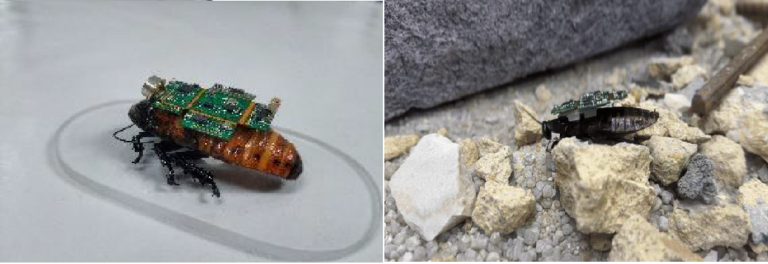
Do you believe that a Cockroach can also help in search and rescue after a disaster? Now believe it. The ‘cyborg Cockroach’ equipped with AI technology used by the Singapore Civil Defence Force is really helping in search and rescue after a disaster.
In the current digital era, artificial intelligence (AI) is bringing revolutionary changes in various sectors of the world. Its contribution in the field of disaster risk reduction and management is particularly noteworthy. AI has emerged as a ‘digital assistant’ in the prediction, preparation and response to natural disasters such as floods, landslides, cyclones, and earthquakes. In countries like Nepal, which are geographically sensitive and frequently affected by natural disasters, AI-based disaster risk reduction and management is emerging as a boon.
To raise awareness about the use of AI in disaster risk reduction, the United Nations Office for Disaster Risk Reduction (UNDRR) and its Global Education and Training Institute (GETI) are conducting a global masterclass series titled “Using Artificial Intelligence (AI) for Disaster Risk Reduction” with the participation of government officials, researchers and humanitarian experts from various countries, including Nepal. The program, which is ongoing in four sessions, are featuring presentations by international experts on topics such as multi-hazard early warning systems, urban sustainability, risk assessment and principles for the ethical use of artificial intelligence.
As discussed in this series, the most important contribution of AI used in disaster risk reduction and management is the ability to make accurate and early predictions. AI tools like Google Flood Hub are providing accurate and timely information about the status of rivers and streams, potential flood risks, and necessary precautionary measures. In particular, it can estimate the potential area and volume of floods up to seven days before they occur. This helps local administrations make timely decisions and move/relocate communities at risk to safer places.
Another important aspect of this is data analysis and self-operation. Systems such as the ‘Multi-Hazard Early Warning Toolbox’ developed by China help in automatically preparing emergency plans by collecting satellite data and weather data. The toolbox, developed by the Shanghai Meteorological Service under the World Meteorological Organization’s ‘Early Warning for All’ initiative, has the ability to monitor various disaster risks such as floods, storms, landslides, and cyclones at the same time. The specialty of this toolbox is that it not only provides forecasts but also automatically prepares disaster management plans. Based on these suggestions, it helps the relevant agencies to make timely and effective decisions. This toolbox provides information according to the user level, from easy information for ordinary citizens, detailed statistics for emergency response teams, and strategic analysis for policymakers.
Similarly, AI technology used by the Singapore Civil Defence Force is making it easier and more efficient to save lives and property by assisting in emergency monitoring and rescue operations. The multi-modal AI system it is using analyzes emergency situations in real time. When a disaster occurs, the system aggregates information from about 1,000 emergency calls, social media updates, and various media sources to present a complete picture of the incident, which helps rescue workers make faster and more accurate decisions.
One of the most fascinating technologies it is using is a Cyborg Cockroach Search and Rescue system. These high-tech insects can enter even the smallest spaces of collapsed buildings, where human rescuers cannot reach. Their successful use in humanitarian missions such as the Myanmar earthquake has proven the effectiveness of this technology.
Similarly, to increase the safety and efficiency of rescue workers, the Civil Defense Force has developed wearable AI devices. These devices provide rescue workers with real-time environmental information, warnings of potential hazards, and even suggestions for appropriate rescue plans.
These examples make it clear that technology is not a replacement for human rescuers, but rather a powerful ally that is reshaping the future of disaster management.
AI-based forecasting systems are not widely discussed in Nepal. But in the context of Nepal, AI-based systems are playing a significant role in increasing disaster awareness in both urban and rural areas. From real-time monitoring to providing information to local communities and obtaining data and information needed for policy formulation, it is of great help. Recognizing this, the Government of Nepal also has prioritized the use of technology for disaster management and is promoting the use of modern technology for pre-disaster information.
Nepal’s geography is complex, with mountains, hills, and plains. Every year, floods and landslides cause huge loss of life and property during the monsoon. Last year, floods and landslides during the monsoon caused many lives and property worth crores in Nepal. But this time, the picture was different – in places where advanced forecasts and vigilance were in place, minimizing loss of life and property was important. (However, in places where such vigilance was low, loss of life and property could not be prevented this time either.) The inconsistent forecasting advice given by Nepal’s radio in the past is full of comedy and caricature. Although the era of mobile SMS has gradually begun, the environment in which trust has not been earned is still alive. But this time, what was more noticeable was that ordinary Nepali citizens seemed to be more busy on their smartphones to check the weather forecast given on the internet than in the past. On the other hand, the Disaster Management Authority, local government bodies and various media outlets were continuously disseminating information. The main sources of all this information were – AI-based forecasting systems.
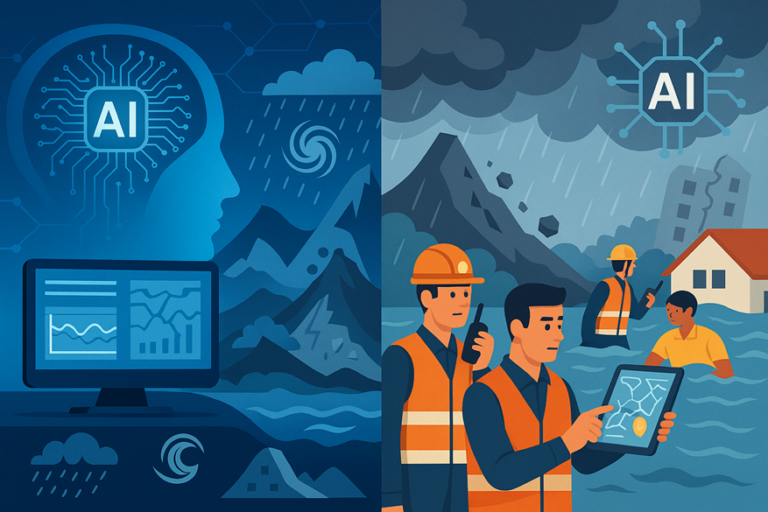
But are AI-based systems completely without challenges and limitations? Of course not. Since these systems work on the basis of data, errors in the data can lead to incorrect conclusions. Sometimes AI can even give ‘hallucinations’, that is, fabricated answers. In a country like Nepal, its use may be hindered in areas where internet access is limited. Therefore, human supervision and responsible use are indispensable for its success.
Another major challenge that Nepal has to face in terms of the use of AI-based systems is the digital divide. Due to the lack of quality internet service in remote geographical areas, the residents of such areas are still deprived of AI-based services. In addition, insufficient knowledge of technology, lack of learning in local communities and financial constraints make it difficult to take full advantage of AI technology.
But despite these challenges, the development and use of AI technology is leading developing countries like Nepal towards new modes of disaster management. Steps such as developing AI models in local languages, making them easily accessible through mobile applications, and conducting training programs at the community level can make its use more widespread.
The development of AI is also setting new guidelines in the field of disaster risk reduction and it is imperative to understand its positive aspects and expand its use at all levels. The proper use of these modern technologies can bring about transformative changes in disaster management. The AI-based disaster management tools have the potential to make disaster management more effective. If the technologies can be used well in the future, the loss of life and property due to disasters will continue to decrease.